
"coffee typhoon damage"
50 article(s) found

Taiwan's Gukeng coffee beans reduced production of raw beans by more than 20%.
Affected by the cold damage and typhoon last year, the production of Gukeng coffee in Yunlin County has been greatly reduced. The output of raw beans in some coffee gardens has decreased by about 70%. Many coffee farmers are reluctant to sell raw beans, resulting in prices rising from 1000 yuan to 1200 yuan per kilogram of raw beans at low and middle elevations. it rose to 1200 yuan to 1500 yuan. Coffee farmer Liu Yiteng pointed out that the harvest period of Gukeng coffee is from October to March of the following year.

Rain plus typhoon... Taiwan's Dongshan coffee beans are afraid of falling through.
Taiwan's Dongshan coffee trees are in the fruiting period, but they are hit by torrential rain again and again. Chen Mulian, chairman of the Dongshan Coffee Industry Development Association, said that the promotion of coffee beetle control has achieved results, organic coffee beans have also passed the test, and Typhoon Terry has hit. Farmers are all worried about the damage of coffee trees and the falling fruit of coffee beans. Even if they stay on the trees, the quality of beans is not good. A whole year's hard work may come to naught.

What are the conditions for growing coffee beans? How do you grow high-quality coffee beans?
Professional coffee knowledge exchange more coffee bean information please pay attention to the coffee workshop (Wechat official account cafe_style) what are the growing conditions of coffee beans? How do you grow high-quality coffee beans? Many people think that Taiwan is not suitable for growing coffee, or that it is impossible for Taiwan to grow good coffee. The so-called good coffee refers to high quality coffee. Coffee cultivation and quality factors, except
The growing environment of coffee
Coffee is native to tropical Africa, the small seed is originated in the tropical plateau of Ethiopia, between 900 and 1800 meters above sea level, with an average annual temperature of 19C; the medium seed is native to the tropical rain forest region of the Congo, below 900 meters above sea level, with an average annual temperature of 2126. C

Coffee planting and cultivation techniques Arabica coffee how to plant coffee seeds and how to grow into trees
Professional coffee knowledge exchange more coffee bean information please follow the coffee workshop (Wechat official account cafe_style) A coffee tree bears fruit several times a year. Coffee tree is a kind of plant that is very sensitive to climate, sunshine, Rain Water and soil. when a coffee bean sprouts up and takes root in the soil, it will squeeze the bean out of the soil.
Fine Coffee learn the growing environment of coffee
Coffee is native to tropical Africa, the small seed is originated in the tropical plateau of Ethiopia, between 900 and 1800 meters above sea level, with an average annual temperature of 19C; the medium seed is native to the tropical rain forest region of the Congo, below 900 meters above sea level, with an average annual temperature of 2126. C 1. Different varieties of temperature coffee have different requirements for temperature. Small seed species need a cooler climate and an annual average temperature of 1.
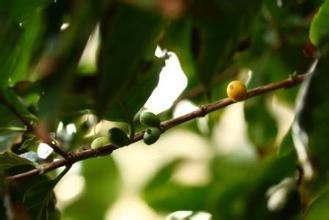
Coffee growing environment affects coffee growing environment and coffee quality Suitable soil and conditions
Coffee originated in tropical Africa, the origin of small species is the tropical plateau of Ethiopia, between 900 and 1800 meters above sea level, with an average annual temperature of 19. C. The medium-grained species originated in the tropical rain forest area of Congo, below 900 meters above sea level, with an annual average temperature of 21~26. C。They are native to shady or semi-shady forests and river valleys, so coffee needs calm wind, warm and humid
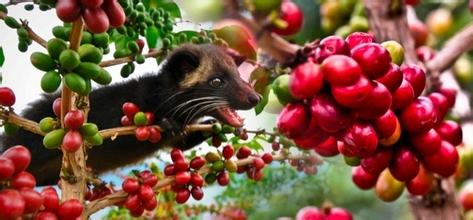
What is the growing environment of coffee beans? What conditions must be met to grow coffee beans?
Coffee is native to tropical Africa. The origin of the small seed species is the tropical plateau of Ethiopia. It is between 900 and 1800 meters above sea level with an average annual temperature of 19. C; the mid-grain species is native to the tropical rain forest of the Congo, with an average annual temperature of 2126 at an altitude of less than 900 meters. C . Their origins are shaded or semi-shaded forests and river valleys, so the formation of coffee requires calm wind, cool and wet.
An introduction to the History of Nicaraguan Coffee
Nicaraguan coffee history introduces that Nicaragua began to grow coffee in the late 1800s, but it was not until the mid-19th century that it became an important export product. The increase in global demand for coffee (especially from North America) and the decline in supply in the Pacific islands have led to the steady development of the coffee market here. Around this time, the first batch appeared in the Managua region.

Cultivation techniques and Biological habits of Coffee Tree
2. Biological habits (1) Botanical characteristics (2) growth and flowering habits (3) requirements for environmental conditions (1) Botanical characteristics 1. Root coffee root is a conic root system, its morphology, distribution and depth vary with agro-technical measures, soil conditions and varieties. In the case of a political party, there is a thick and short main root and many developed lateral roots. According to the observation in Hainan Island

Get out of your own way and push coffee tourism in Pingtung
Exchange of professional baristas Pingtung coffee, which was severely reduced in the coffee workshop (Wechat official account cafe_style) last year, is expected to be harvested smoothly after September. This year, the Pingtung county government held a coffee bean evaluation to gain high popularity, and the hometown Coffee Alliance also launched a coffee tour to encourage tourists to experience roasting and cup testing, and then bring their own roasted coffee beans home to feel the unique flavor of Pingtung coffee. Pingtung
Old mantelin is old mantelin? Why wet planing?
Old mantning varieties: Caturra, Typica, Sidikalong Soil: volcanic soil Elevation: 1500m Treatment: aged bean treatment The most famous origin of Asian coffee is the islands of Malaysia: Sumatra, Java, Kalimantan. Sumatra mantning coffee from Sumatra, Indonesia, is the most famous, and it has two flavors.
Coffee cultivation techniques
Coffee, cocoa and tea are called the three major beverages in the world, and their output, consumption and output value all rank first. In addition to being used as a beverage, coffee can also extract caffeine and coffee oil; in medicine, it can be used as an anesthetic, stimulant and diuretic cardiotonic agent.

Comparison of the difference between wet planing and washing by Manning treatment in Sumatra, Indonesia
Professional coffee knowledge exchange more coffee bean information please follow the coffee workshop (Wechat official account cafe_style) the coffee we usually drink is not a coffee bean growing out, but a round fruit. Remove the outer skin and pulp through various treatment methods to get the innermost coffee seed, which becomes the coffee we usually drink after baking.

Indonesia Sumatra Manning treatment-wet planing this treatment has the characteristics of hand grinding
Professional coffee knowledge exchange more coffee bean information please follow the coffee workshop (Wechat official account cafe_style) Indonesia from west to east, more than 17000 large and small islands, like jade scattered on the earth's equator. Indonesian coffee is mainly produced in Sumatra, Java, Sulawesi and Bali, among which Mantenin from Sumatra is the most popular.

How about Sumatran Coffee? introduction to the characteristics of Sumatran semi-washed coffee
Professional coffee knowledge exchange more coffee bean information please follow the coffee workshop (Wechat official account cafe_style) Front Street Coffee-Sumatra semi-washing treatment introduce Manning's unique wet planing method, also known as Wet Hulling, also known in the local language as Giling Basah, is the traditional Indonesian coffee treatment. Judging from the name alone,
Indonesian tiger Mantenin
Indonesia is an archipelago country, the main producing areas are located in Sumatra, Java and Sulawesi. The northern part of Sumatra is relatively high above sea level. Aceh, where Lake Tawa is located, and North Sumatra, where Lake Toba is located, are the main Arabica coffee producing areas. Lake Tawa is located in the Gayo Mountains of the northern Aceh province of Sumatra, across Indonesia on both sides of the equator, the hot and humid tropics

What is the effect of Mazu Coffee? flavor description characteristics of planting area
Professional baristas exchange please pay attention to the efficiency of coffee workshop (Wechat official account cafe_style) Alishan Alishan belongs to the branch of the Yushan Mountains, Alishan is located above 2000 meters above sea level, coordinates are 23 degrees 31 minutes north latitude, 120 degrees 48 minutes east longitude, east Yushan Mountains, surrounded by high mountains, cool climate, the average temperature is 10 degrees Celsius.

Historical characteristics of Mazu Coffee planting and Flavor of producing area
For the exchange of professional baristas, please pay attention to the history of Alishan mocha coffee in the coffee workshop (Wechat official account cafe_style). Alishan coffee is the most special and superior coffee in Taiwan, and it produces less, so things are scarce. Alishan, located 75 kilometers east of Chiayi City, Taiwan, is located above 2000 meters above sea level, adjacent to the Yushan Mountains and Yushan National Park in the east, surrounded by high mountains and gas.

What are the characteristics of wet planing? why do Indonesian Mantenin coffee beans use wet planing?
What kind of treatment is the wet planing method? What is the specific procedure? Wet planing, also known as wet shelling (WetHulling), also known as GilingBasah in the local language, is a traditional Indonesian coffee treatment. Judging from the name alone, the wet planing method